

522-Adapting-UK-housing-for-a-changing-climate-Full-Paper
Hubert, Jon, Martinson, Brett and al-Maiyah, Sura (2026) 522-Adapting-UK-housing-for-a-changing-climate-Full-Paper. In: PLEA 2026, 27-31 July, 2026, San Jose, Costa Rica. (Submitted)
![[img]](https://ube.repository.guildhe.ac.uk/style/images/fileicons/text.png) |
Text
522-Adapting_UK_housing_for_a_changing_climate_Full_Paper.docx Available under License Creative Commons Attribution. Download (1MB) |
|
![[img]](https://ube.repository.guildhe.ac.uk/id/eprint/279/2/image12.png)
|
Image
image12.png Available under License Creative Commons Attribution. Download (16kB) | Preview |
|
![[img]](https://ube.repository.guildhe.ac.uk/id/eprint/279/3/image11.png)
|
Image
image11.png Available under License Creative Commons Attribution. Download (32kB) | Preview |
|
![[img]](https://ube.repository.guildhe.ac.uk/id/eprint/279/4/image9.png)
|
Image
image9.png Available under License Creative Commons Attribution. Download (19kB) | Preview |
|
![[img]](https://ube.repository.guildhe.ac.uk/id/eprint/279/5/image8.png)
|
Image
image8.png Available under License Creative Commons Attribution. Download (18kB) | Preview |
|
![[img]](https://ube.repository.guildhe.ac.uk/id/eprint/279/6/image5.jpeg)
|
Image
image5.jpeg Available under License Creative Commons Attribution. Download (37kB) | Preview |
|
![[img]](https://ube.repository.guildhe.ac.uk/id/eprint/279/7/image6.png)
|
Image
image6.png Available under License Creative Commons Attribution. Download (257kB) | Preview |
|
![[img]](https://ube.repository.guildhe.ac.uk/id/eprint/279/8/image7.png)
|
Image
image7.png Available under License Creative Commons Attribution. Download (106kB) | Preview |
|
![[img]](https://ube.repository.guildhe.ac.uk/id/eprint/279/9/image2.png)
|
Image
image2.png Available under License Creative Commons Attribution. Download (16kB) | Preview |
|
![[img]](https://ube.repository.guildhe.ac.uk/id/eprint/279/10/image1.png)
|
Image
image1.png Available under License Creative Commons Attribution. Download (658kB) | Preview |
|
![[img]](https://ube.repository.guildhe.ac.uk/id/eprint/279/11/image10.png)
|
Image
image10.png Available under License Creative Commons Attribution. Download (17kB) | Preview |
|
![[img]](https://ube.repository.guildhe.ac.uk/id/eprint/279/12/image3.png)
|
Image
image3.png Available under License Creative Commons Attribution. Download (15kB) | Preview |
|
![[img]](https://ube.repository.guildhe.ac.uk/id/eprint/279/13/image4.png)
|
Image
image4.png Available under License Creative Commons Attribution. Download (166kB) | Preview |
|
|
Text
522-Adapting_UK_housing_for_a_changing_climate_Full_Paper (1).docx Available under License Creative Commons Attribution. Download (1MB) |
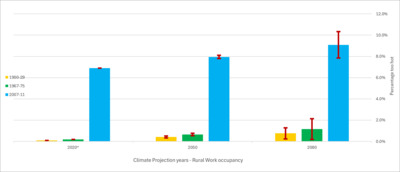
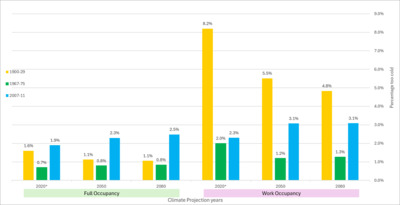
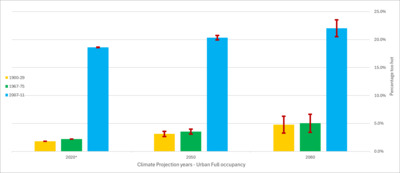
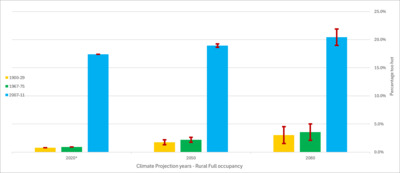


Abstract
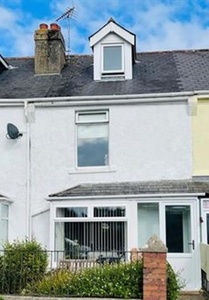
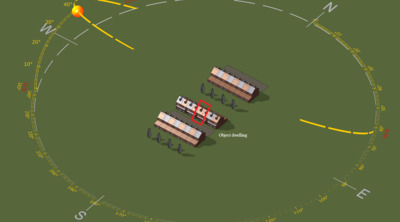
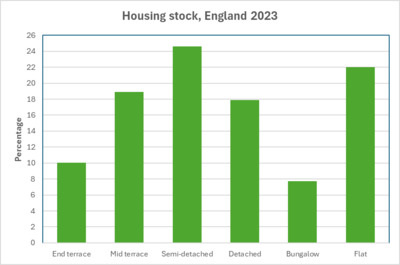
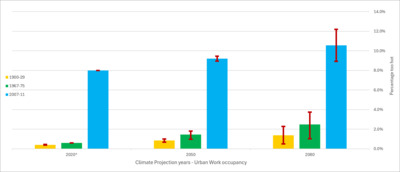
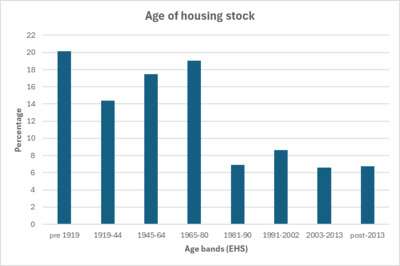
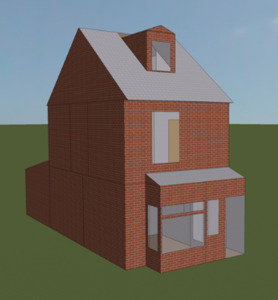
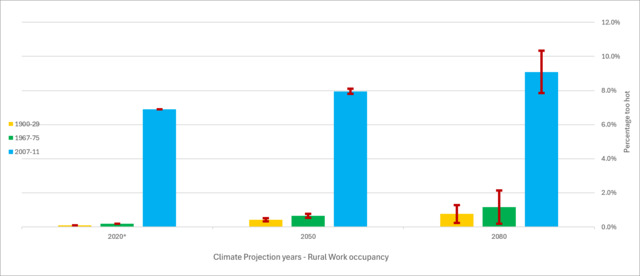
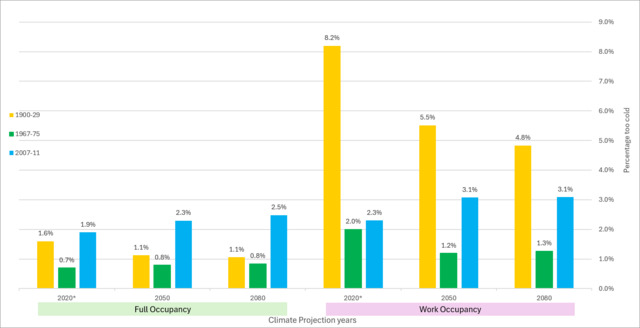
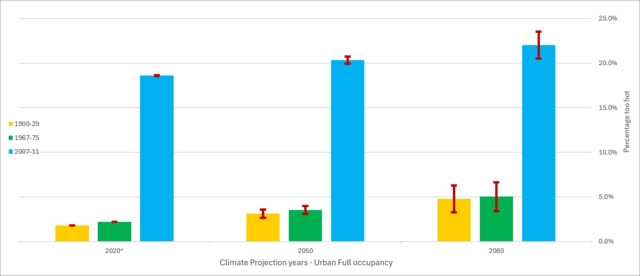
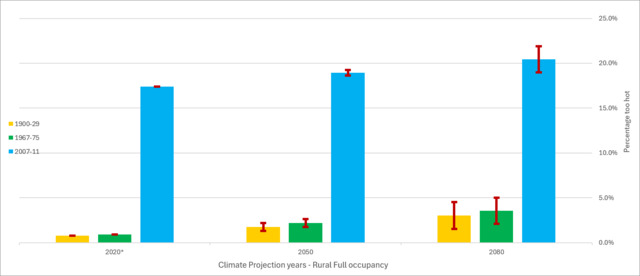
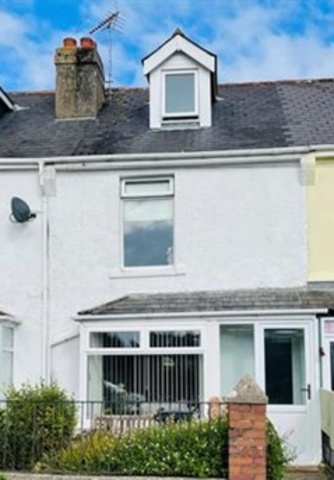
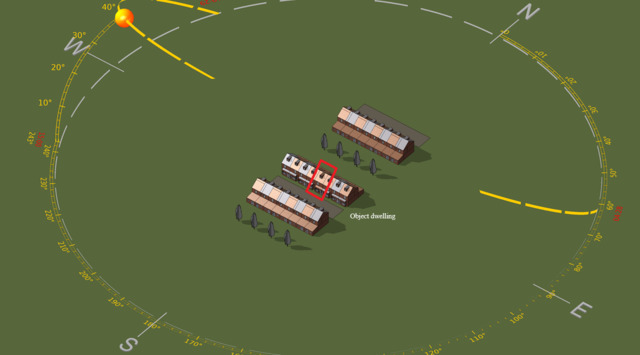
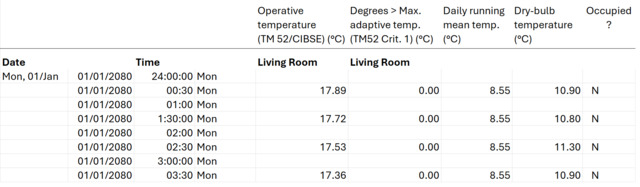
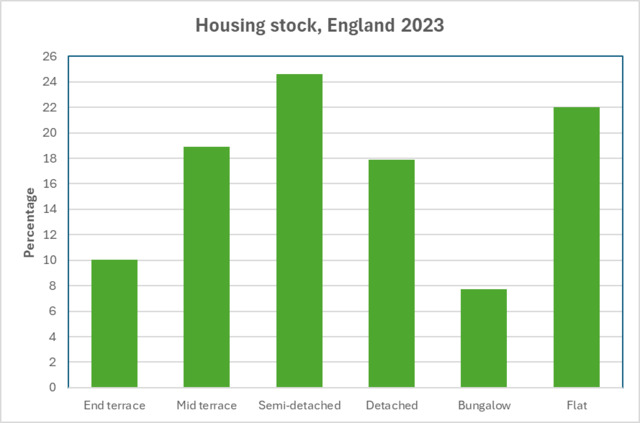
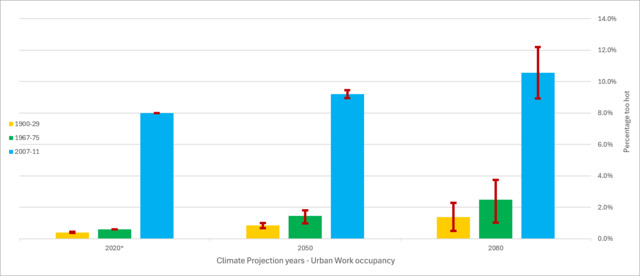
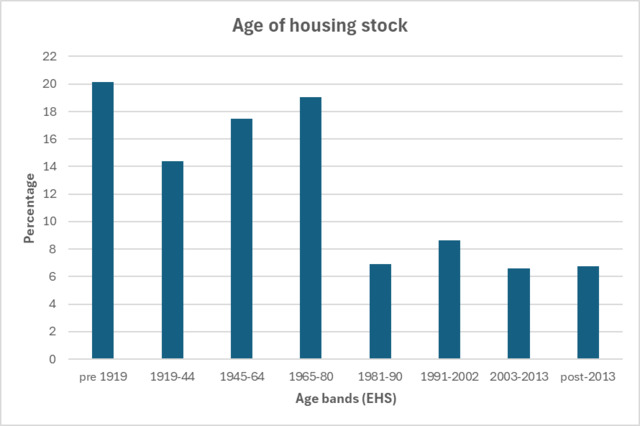
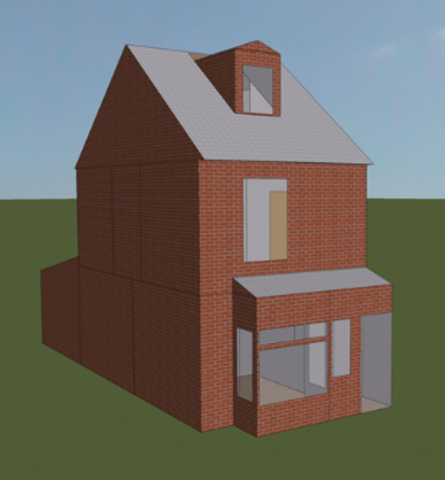
The UK Committee on Climate Change state that “the 29 million homes across the UK must be made low-carbon, low-energy and resilient to a changing climate”, with reference to the UK Climate Change Act and meeting a Net Zero target by 2050. Given this will need time, money and resources beyond any provided to date, this research develops a methodology using dynamic simulation modelling to inform where resources may be directed to effect change for those properties most in need of adaptation. Factors affecting the potential adaptation of existing UK dwellings include cost, disruption to occupants, availability of labour, age of housing stock, location (urban, suburban, rural) and the pace of climate change, principally the increase in temperature. The likelihood of the entire UK housing stock being adapted to low energy standards is remote, given the number of people working in construction, the timeframe, and willingness of occupants to either move or put up with the refurbishment of their property while resident. Data from the literature is used to generate common housing archetypes in a virtual dynamic simulation modelling (DSM) software package. The method for collection and analysis of these data is quantitative, focussing on statistical outputs from the UK Standard Assessment Procedure, English Housing Survey, and various studies in related subject areas. The research evaluates age, archetype, location and orientation of housing stock, alongside the ability of occupants to adapt to changes in temperature in dwellings modelled on those conditions, using present and future climate probability data. The overarching majority of occupants adapt more readily to fluctuations in external temperatures when indoors, than is recognised at present. This paper focusses on a specific sample of UK housing, the mid-terrace dwelling, modelling that archetype in three different age bands to assess resilience to changes in climate. The main conclusion based on this sample, is that fewer domestic dwellings than previously thought need to be adapted, based on a combination of age, archetype, topographical location and orientation. Climate projections for the UK over the 21st century show a warming trend; winters will not be as cold, while refurbishment and over-insulation of dwellings can increase the level of overheating, with the well-documented effects on occupant health that result. This ‘less is more’ approach to adaptation of housing stock contributes to the debate on policy in terms of spending taxpayer contributions on making homes resilient to climate change. The significance of this study to passive and low energy architecture is the recognition that a warming climate can be beneficial to occupants in terms of adaptive comfort, refurbishing only those dwellings that require adaptation, and leaving alone those that will cope well enough with a warming climate. The use of DSM to replicate homes in their local environments, incorporating the PLEA ‘common sense architecture’ pillar of local wisdom to only change and adapt where necessary is the basis of this research.
| Item Type: | Conference or Workshop Item (Paper) |
|---|---|
| Sustainable Development Goals: | |
| Keywords: | Climate, Adaptive comfort, Dynamic Simulation Modelling |
| Divisions: | Sustainable Built Environment & Property Research Centre > School of Construction, Surveying and Engineering |
| Depositing User: | Jonathan Hubert |
| Date Deposited: | 20 Jul 2026 09:11 |
| Last Modified: | 20 Jul 2026 09:11 |
| URI: | https://ube.repository.guildhe.ac.uk/id/eprint/279 |
Actions (login required)
 |
Edit Item |